
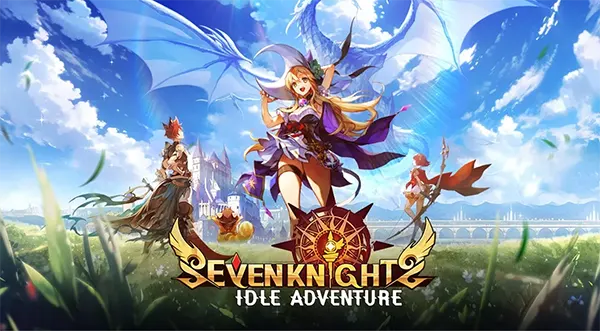
Seven Knights Idle Adventure — How Idle Progression and Resource Farming Actually Work
Seven Knights Idle Adventure builds its core experience around passive progression, where battles continue even when the player is offline. This system is not simply about leaving the game running; it relies on a structured loop of upgrades, team optimisation, and efficient resource farming. Understanding how these mechanics interact is essential for steady growth, especially as difficulty scaling becomes more demanding in later stages.
How Idle Progression Works in Practice
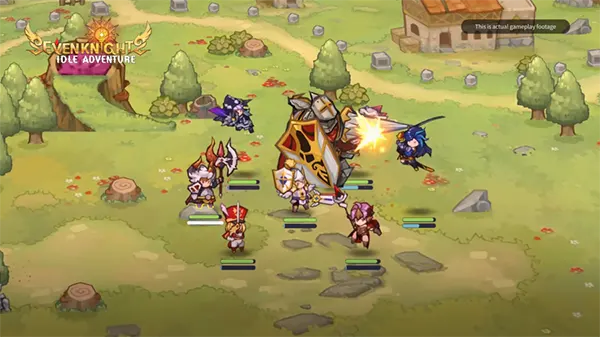
The foundation of progression in Seven Knights Idle Adventure lies in continuous automated combat. Your team advances through stages, defeating waves of enemies and bosses without manual input. Each cleared stage increases both the difficulty and the rewards, creating a natural progression curve that encourages optimisation rather than constant active play.
Offline rewards are calculated based on your last cleared stage and overall team strength. The game accumulates gold, experience, and upgrade materials while you are away, but there is a limit to how much can be stored. This cap encourages regular logins to collect resources and maintain efficiency in long-term progression.
Hero upgrades play a central role in pushing forward. Levelling, awakening, and equipping characters directly increase your combat efficiency. Idle progression is not purely passive; it depends on strategic decisions about which heroes to prioritise and how to balance damage output with survivability.
Stage Scaling and Progression Limits
As you advance, enemies gain increased health, defence, and attack values. This scaling is gradual at first but becomes significantly steeper in mid- and late-game stages. Progression slows down unless players actively adjust their builds and upgrade paths.
Boss encounters act as checkpoints. These stages often require more than raw power, especially when bosses introduce mechanics such as area damage or status effects. If your team composition is not balanced, progression can stall even if overall stats appear sufficient.
To overcome these limits, players must revisit earlier systems—optimising gear, upgrading skills, and refining hero synergy. Idle progression becomes less about waiting and more about preparing the right conditions for the next breakthrough.
Core Resource Types and Their Roles
Resource management defines long-term success. Gold remains the primary currency used for levelling heroes and improving core stats. Its steady accumulation through idle rewards makes it the backbone of all progression systems.
Upgrade materials, including enhancement stones and awakening items, are more limited and require targeted farming. These resources are often tied to specific game modes or higher stages, making them a bottleneck for advancing hero power beyond basic levels.
Summoning currency introduces another layer of progression. New heroes significantly affect team strength, and duplicates are often required for upgrades. This creates a loop where farming resources supports summoning, which in turn improves farming efficiency.
Balancing Passive and Active Farming
Idle rewards provide consistency, but they are not always sufficient for rapid growth. Active farming through dungeons and event stages allows players to target specific materials that are otherwise slow to accumulate passively.
Daily and weekly activities offer structured opportunities to earn high-value rewards. These tasks often include boss fights, challenge modes, or limited-time events that provide better resource efficiency than standard idle progression.
Efficient players combine both approaches. They rely on idle farming for baseline income while using active gameplay sessions to address resource shortages. This balance ensures steady progress without excessive time investment.
Optimising Farming Efficiency in 2026 Meta
As of 2026, the meta in Seven Knights Idle Adventure prioritises synergy-based team compositions rather than raw individual strength. Heroes with buffs, debuffs, and scaling abilities provide better long-term efficiency compared to purely damage-focused characters.
Speed of stage clearing is a critical factor. Faster clears result in more rewards over time, even if individual drops remain the same. Players often adjust their teams to maximise clear speed rather than survivability once they reach stable progression levels.
Another important factor is upgrade timing. Investing resources too early into suboptimal heroes can slow down overall progression. Players benefit from saving materials until they unlock stronger characters or reach key upgrade milestones.
Common Mistakes That Slow Down Progress
One frequent issue is over-investment in early-game heroes. While they help in initial stages, many of them become inefficient later. Transitioning to stronger units at the right time is essential to maintain momentum.
Ignoring resource caps is another problem. Idle rewards stop accumulating once storage limits are reached, leading to wasted potential. Regular collection ensures that farming remains continuous and effective.
Finally, neglecting team composition can create hidden inefficiencies. Even with high-level heroes, a poorly balanced team can struggle against certain stages. Adjusting roles and synergy often leads to better results than simply increasing power levels.