

Assassin’s Creed Jade (Mobile): Open World China and Touchscreen Controls
Assassin’s Creed Jade is Ubisoft’s dedicated mobile entry set in ancient China, built specifically for iOS and Android rather than adapted from console code. As of 2026, the project represents one of the most ambitious attempts to bring a full-scale Assassin’s Creed experience to smartphones. Set during the Qin dynasty in the 3rd century BCE, the game combines historical fiction, large explorable regions and stealth-driven missions, all redesigned for touchscreen interaction. This article analyses how Jade translates the franchise’s open-world formula to mobile hardware, how its control scheme functions in practice, and what technical compromises shape the experience.
Historical Setting and Open World Structure
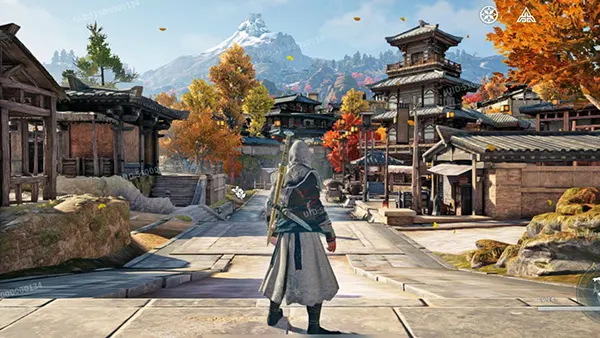
Assassin’s Creed Jade is set in 215 BCE, during the reign of Qin Shi Huang, China’s first emperor. This period marks the consolidation of the Warring States and the foundation of a unified imperial system. Ubisoft’s developers worked with historical consultants to recreate architecture, clothing, military hierarchy and early Great Wall fortifications. While artistic liberties remain, the setting reflects documented urban layouts and frontier regions of the era.
Unlike linear mobile action games, Jade offers a semi-open world divided into large connected regions. Players can travel across countryside landscapes, fortified cities and mountainous terrain without constant loading screens on modern devices. Exploration includes climbing watchtowers, infiltrating garrisons, navigating rooftops and engaging in environmental stealth — core mechanics long associated with the franchise.
The world design prioritises verticality despite mobile hardware constraints. Rooftop pathways, scaffolding and cliff faces create multi-layered routes. This vertical design is not decorative; missions actively reward height advantage and silent entry points. Compared to earlier mobile spin-offs in the series, Jade aims to replicate the density and systemic interaction of console entries rather than offering simplified corridors.
Mission Design and Gameplay Systems
Mission structure blends traditional assassination contracts with story-driven sequences. Players receive objectives that encourage reconnaissance before engagement. Scouting enemy patrol patterns, identifying weak entry points and using distraction tools remain essential. The game does not rely solely on combat encounters; stealth bonuses and optional objectives influence progression.
Combat systems are streamlined for mobile but retain light and heavy attacks, dodge mechanics and parry timing. Enemy types vary between armoured soldiers, archers and elite guards, each requiring different approaches. The emphasis remains on positioning and preparation rather than button-mashing, which would be impractical on a touchscreen interface.
Character progression introduces RPG-style elements. Equipment tiers, weapon upgrades and skill trees allow players to specialise in stealth efficiency, ranged precision or direct confrontation. While monetisation elements exist in the broader mobile ecosystem, core narrative missions remain fully accessible without competitive multiplayer pressure.
Touchscreen Controls and Interface Adaptation
One of Jade’s most technically demanding aspects is its control scheme. Ubisoft redesigned movement and camera handling to function without physical buttons. A virtual joystick on the left side manages movement, while contextual action buttons appear dynamically on the right. This adaptive interface reduces clutter but requires player familiarity to avoid accidental inputs.
Parkour traversal has been simplified compared to console entries. Instead of manual jump timing in every situation, contextual climbing triggers automatically when the character approaches scalable surfaces. This reduces frustration on smaller screens while preserving the illusion of fluid mobility across rooftops and walls.
Combat controls rely on tap-and-hold gestures combined with swipe-based camera adjustment. Dodge actions are executed through directional swipes, and parries depend on visual timing indicators. The learning curve is noticeable during the first few hours, particularly for players accustomed to controllers, but responsiveness improves on devices with high refresh rate displays.
Performance Optimisation on Modern Smartphones
By 2026, flagship devices equipped with advanced mobile chipsets handle Jade at stable frame rates above 45–60 FPS under high settings. Mid-range smartphones require reduced graphical fidelity, especially in densely populated city zones. The game offers scalable resolution and texture options to balance performance and battery consumption.
Streaming large environments remains one of the most complex technical challenges. Jade uses segmented asset loading to prevent abrupt texture pop-in. However, occasional draw distance compromises are visible when surveying landscapes from high vantage points. These limitations reflect the realities of mobile hardware rather than design oversights.
Battery drain and device heat are practical concerns. Extended play sessions can significantly reduce battery life, particularly when high graphical presets are enabled. Ubisoft integrated performance presets to mitigate overheating, acknowledging that sustained open-world rendering on smartphones demands careful thermal management.
Position Within the Assassin’s Creed Franchise
Assassin’s Creed Jade differs from previous mobile entries such as Assassin’s Creed Rebellion, which focused on 2.5D mechanics and shorter missions. Jade instead mirrors the structure of mainline titles, albeit scaled for mobile. The decision to set the story in China addresses a long-standing fan interest in exploring East Asian historical settings within the franchise.
The narrative connects to the broader Assassin–Templar conflict, though it introduces a customisable protagonist rather than a fixed historical figure. This design choice aligns with mobile player preferences for avatar personalisation while maintaining canonical links to established lore.
In terms of market positioning, Jade reflects Ubisoft’s strategy to expand premium franchises into mobile ecosystems without reducing scope. The game competes not only with other mobile action RPGs but with high-production console-quality titles increasingly released on smartphones.
Long-Term Viability and Player Expectations
As of 2026, player expectations for mobile games have shifted significantly. Audiences now expect cross-progression, cloud saving and graphical parity across devices. Jade supports account synchronisation, allowing consistent progress across multiple smartphones and tablets.
Ongoing updates remain critical for retention. Seasonal content, additional missions and cosmetic expansions contribute to longevity. However, sustained success depends on balancing monetisation with fairness. Overly aggressive in-app purchases risk undermining trust among long-term players.
Assassin’s Creed Jade demonstrates that open-world design on mobile is technically viable when carefully optimised. While compromises exist in control precision and graphical scale, the core identity of stealth, historical immersion and environmental traversal remains intact. The project stands as a case study in how major franchises adapt to evolving hardware without abandoning their structural foundations.