
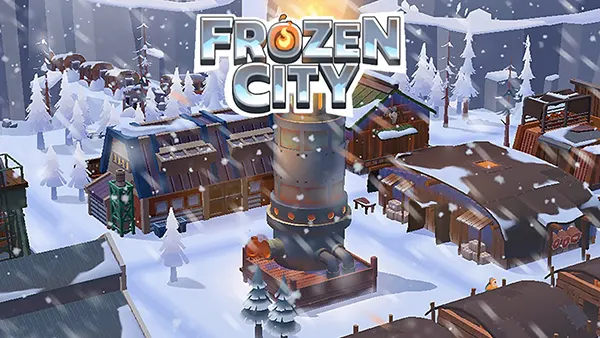
Frozen City — Survival Strategy and Resource Management on Mobile Devices
Frozen City is one of the more grounded mobile strategy titles released in recent years, combining city-building mechanics with survival management in extreme conditions. By 2026, it has established a stable player base thanks to its realistic approach to resource scarcity, temperature control, and long-term planning. Rather than relying on fast-paced action, the game rewards careful decisions, efficient workforce allocation, and the ability to adapt to unpredictable environmental challenges.
Core Gameplay Mechanics and Strategic Depth
At its core, Frozen City is built around the balance between survival and expansion. Players are responsible for maintaining a settlement in a frozen wasteland, where every resource — from coal to food — directly impacts the population’s survival. The central mechanic revolves around managing heat, as low temperatures can quickly lead to illness or death if infrastructure is not properly maintained.
Resource chains play a crucial role in long-term progression. For example, gathering raw materials is only the first step; they must be processed, stored, and distributed efficiently. This creates a layered gameplay loop where each building has a purpose, and poor planning can lead to bottlenecks that slow down development significantly.
Another important aspect is workforce management. Citizens are not just passive elements — they require housing, food, and warmth. Assigning workers to the right tasks at the right time becomes a strategic challenge, especially during resource shortages or sudden weather shifts.
Balancing Survival and Expansion Decisions
One of the defining features of Frozen City is the constant tension between growth and stability. Expanding too quickly can stretch resources thin, while playing too cautiously may slow down progress and limit access to advanced buildings. This balance forces players to think several steps ahead rather than reacting only to immediate needs.
Seasonal changes and random events introduce additional layers of unpredictability. Harsh storms or supply shortages can disrupt even well-optimised settlements, requiring flexible strategies rather than rigid planning. Players who adapt quickly tend to perform better over time.
By 2026, updates have improved event variety and difficulty scaling, making decision-making more meaningful. The game no longer allows simple optimisation loops; instead, it encourages dynamic strategies based on changing conditions.
Resource Management Systems and Efficiency
Resource management in Frozen City goes beyond simple accumulation. Each resource has a clear role, and mismanagement can trigger cascading failures across the entire settlement. Coal, for instance, is essential for heating, while food supports workforce productivity. A shortage in one area quickly affects others.
Storage and logistics are equally important. Without proper storage facilities, excess production is wasted. Transport routes between buildings must be optimised to reduce delays, especially in later stages where settlements become more complex and resource flow increases.
The game also introduces prioritisation systems, allowing players to allocate resources based on urgency. For example, heating systems can be prioritised over expansion projects during extreme weather, ensuring survival even when resources are limited.
Optimising Production Chains for Long-Term Growth
Efficient production chains are the backbone of a successful settlement. Players must identify which buildings complement each other and place them strategically to minimise downtime. For instance, positioning processing facilities near resource extraction points can significantly improve efficiency.
Automation features introduced in recent updates allow partial optimisation of repetitive tasks. However, full automation is intentionally limited, ensuring that player involvement remains essential. This maintains the strategic depth without turning the game into a passive experience.
Advanced players often focus on redundancy systems — having backup resource flows in case one chain fails. This approach reduces risk and ensures that critical systems, such as heating, remain operational under all conditions.
Mobile Experience, Updates, and Player Retention in 2026
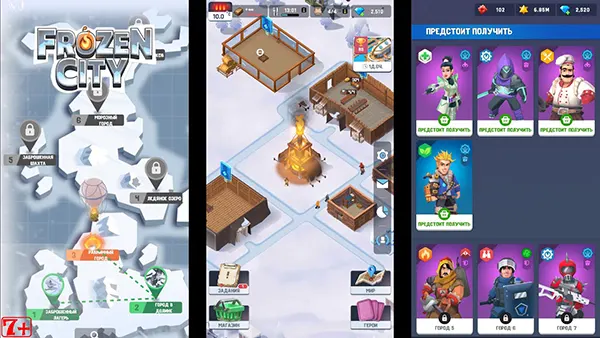
Frozen City is designed specifically for mobile devices, with controls and interface elements adapted for touchscreens. Navigation between buildings, resource tracking, and workforce assignment are streamlined to reduce unnecessary complexity without removing depth.
Regular updates have played a significant role in maintaining player engagement. By 2026, the developers have introduced new regions, additional building types, and improved balancing systems. These updates address earlier criticisms related to progression pacing and resource scarcity.
The monetisation model remains relatively restrained compared to many mobile strategy titles. While optional purchases exist, the core gameplay remains accessible without mandatory spending, which has contributed to long-term player retention.
Why Frozen City Stands Out Among Mobile Strategy Games
Unlike many competitors, Frozen City focuses on realism and consequence-driven gameplay. Every decision has a visible impact, whether it relates to resource allocation, infrastructure development, or population management. This creates a more immersive and thoughtful experience.
The game’s pacing also differs from typical mobile strategies. Instead of encouraging constant short sessions, it supports longer, more deliberate play. This appeals to players who prefer planning and analysis over rapid progression.
As of 2026, Frozen City remains relevant due to its consistent updates and balanced design philosophy. It offers a structured yet flexible approach to survival strategy, making it a strong example of how mobile games can combine accessibility with depth.