
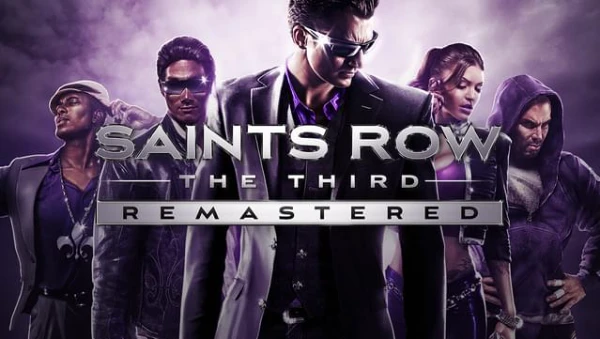
Saints Row: The Third Remastered on Mobile: Controller Support, Vehicle Handling and Co-op
Saints Row: The Third Remastered arrived on iOS and Android on 29 October 2026, bringing the full Steelport adventure to smartphones and tablets. Developed for mobile by Feral Interactive, this release retains the open-world campaign, extensive vehicle collection and outrageous missions of the remastered game. More importantly, it includes features that make a substantial difference to everyday play: customisable touchscreen controls, external gamepad support and online co-operative multiplayer for two players. Driving through busy streets, controlling aircraft and coordinating missions with a friend are all possible without a console or gaming PC. Understanding how these features work, and where their practical limitations lie, helps players choose suitable controls and get more from the mobile edition.
Controller Support and Touchscreen Controls on iOS and Android
Saints Row: The Third Remastered offers two main ways to control the action on a smartphone: touchscreen inputs and a compatible external gamepad. Feral Interactive has adapted the original control scheme for mobile devices rather than simply placing an unchanged console interface over the screen. The touchscreen layout is customisable, allowing players to adjust the positioning of virtual controls according to their preferences. This matters in a game that regularly switches between driving, shooting, running and interacting with the environment. A comfortable arrangement can make everyday movement easier and reduce accidental inputs when several actions need to be performed quickly.
Controller support is officially available across the mobile release, including iPhone, iPad and supported Android devices. Apple’s App Store specifically identifies compatible PlayStation, Xbox and MFi controllers as supported options. These are particularly useful for players accustomed to traditional action games, where separate analogue sticks handle movement and camera direction. Physical buttons can also make it easier to keep track of aiming, acceleration, braking and other frequently used commands without covering the display with your fingers. However, the presence of general controller support does not guarantee that every third-party accessory will work correctly. Compatibility can depend on the controller model, operating system and connection method.
Connecting a wireless controller normally begins in the phone’s Bluetooth settings. Put the accessory into its pairing mode, select it from the list of available devices and confirm that the operating system recognises it before launching the game. For example, many Xbox controllers use a dedicated pairing button, while PlayStation controllers require a particular button combination depending on the model. Once connected, players can check how the game responds to movement, camera adjustments and action buttons. Wired USB-C controllers may also be an option on supported devices, although compatibility should be checked with the accessory manufacturer. Feral additionally confirms keyboard and mouse support on Android and iPadOS, offering another control option beyond touchscreens and gamepads.
Choosing and Adjusting Controls for Combat and Exploration
The most noticeable differences between touchscreens and physical controllers appear during demanding combat encounters. Saints Row frequently combines movement, aiming, vehicle explosions and enemy attacks within the same mission. Using virtual controls means dividing attention between the action and the locations of buttons on the display. A gamepad provides physical reference points, making it easier to move and adjust the camera simultaneously. This can be particularly helpful during firefights against the Morningstar, Deckers and Luchadores, the three main gangs associated with the Syndicate. Nevertheless, touchscreen controls remain practical for exploration, shorter encounters and casual sessions when carrying an additional accessory would be inconvenient.
Players using touch controls should begin by adjusting the interface to match their grip and screen size. On a smaller phone, keeping frequently used buttons within easy reach of the thumbs may be more important than creating a layout that resembles a console controller. On a tablet, the additional display space allows more freedom, but controls placed too close to the centre can interfere with visibility. Camera movement deserves particular attention because it affects aiming on foot and awareness while driving. Rather than changing every setting at once, it is generally better to adjust one element, test it during ordinary gameplay and continue until the arrangement feels consistent.
External controllers are especially worthwhile for longer sessions involving repeated missions or extensive driving. A phone stand or suitable controller mount can help position the screen comfortably, while a reliable connection reduces interruptions during important moments. Players should also consider battery consumption, as prolonged gaming with wireless accessories can require charging both the smartphone and controller. There is no need to purchase an expensive specialist accessory simply to play Saints Row: The Third Remastered. An already-owned compatible Xbox, PlayStation or MFi controller may be sufficient. The most useful approach is to confirm operating-system compatibility and test the essential controls before deciding whether an additional purchase is necessary.
Vehicle Handling: Cars, Motorcycles, Tanks and Aircraft
Vehicles are central to the Saints Row experience, and the mobile version preserves the wide selection available in the original adventure. Steelport can be explored using ordinary road cars, motorcycles, heavy military vehicles and more unusual machines such as hoverbikes. Aircraft expand the possibilities further, with helicopters and fighter jets allowing players to travel above the city and approach certain activities from a different direction. These vehicles are not merely decorative: they support story missions, combat encounters, exploration and free-roaming activities. Because each category behaves differently, effective driving depends on learning how speed, steering and camera movement interact with the chosen control method.
Ordinary cars provide the most accessible introduction to vehicle handling. Their controls revolve around acceleration, braking, steering and maintaining awareness of traffic and obstacles. A gamepad can make steering adjustments more predictable because players can regulate analogue inputs rather than relying entirely on virtual buttons. With touchscreen controls, it is useful to practise on relatively open roads before attempting fast pursuits through congested streets. Sudden changes of direction become more difficult when the vehicle is already travelling quickly, particularly if the camera is poorly positioned. Reducing speed before a sharp corner is often more effective than trying to correct the vehicle after it begins to collide with surrounding traffic.
Military vehicles and aircraft require a different approach. Tanks are designed for destructive encounters rather than precise urban driving, so positioning and awareness of nearby threats matter more than negotiating every corner quickly. Helicopters introduce altitude and directional control, while fighter jets demand greater attention to speed and flight paths. Hoverbikes provide another form of movement that differs from conventional road vehicles. The mobile edition retains these possibilities, but the best input method can vary between them. Players who find aircraft difficult to manage using touchscreen controls may prefer a gamepad, especially when they need to coordinate movement, camera direction and weapons during a single mission.
Practical Driving Techniques for Missions and Open-World Activities
Learning to drive effectively begins with selecting a suitable vehicle for the task. A fast sports car can be useful for crossing Steelport quickly, but speed alone does not guarantee success during missions that involve narrow roads, heavy traffic or hostile vehicles. A more manageable car may be preferable when precise turns and frequent stops are required. Motorcycles offer a different experience because their smaller size can make navigating traffic easier, although collisions can quickly interrupt a journey. Before starting an unfamiliar activity, players should consider whether they need speed, manoeuvrability, durability or additional firepower rather than choosing a vehicle exclusively for its appearance.
Camera management is another important part of mobile driving. Keeping a clear view of the road makes it easier to anticipate corners, recognise incoming traffic and respond to obstacles. During pursuits, constantly correcting the camera can become distracting, so a consistent control arrangement is valuable. When using a touchscreen, players can benefit from practising steering and camera movement separately before combining them in demanding situations. With a gamepad, the two analogue sticks allow those actions to be handled independently, which can feel more natural to experienced console players. In both cases, familiarity with the controls matters more than attempting to drive at maximum speed throughout an entire mission.
Steelport’s optional activities provide opportunities to practise without concentrating exclusively on the main storyline. The game features diversions involving vehicles, dangerous stunts and deliberately chaotic encounters, including the long-running Insurance Fraud activity. Exploring the city between missions also helps players become familiar with road layouts, bridges and routes between districts. The mobile edition includes the original downloadable content, adding further missions and additional vehicles to the overall package. This gives players more opportunities to experiment with different types of transport. Taking time to learn a vehicle’s behaviour during free exploration can make later missions easier, particularly when rapid movement and combat are required at the same time.

Online Co-op Multiplayer and the Complete Mobile Experience
One of the most significant features of Saints Row: The Third Remastered on mobile is the inclusion of two-player online co-operative gameplay. Feral Interactive has confirmed that the entire game can be played alone or alongside a friend, rather than restricting multiplayer to a small selection of separate missions. This makes the mobile release more closely aligned with the original Saints Row experience than a simplified single-player adaptation. Both participants can take part in the struggle for control of Steelport, complete missions and engage with the open world together. For players interested in shared adventures, this is an important distinction from mobile games that offer only competitive multiplayer or limited social functions.
Online co-op requires an internet connection, as the two participants must communicate through the game’s multiplayer systems. The mode is designed for two players, not larger groups, so friends should plan their sessions accordingly. A reliable Wi-Fi connection is usually preferable to an unstable mobile connection, particularly during missions involving fast driving, explosions and several enemies. Connection quality can affect responsiveness and the consistency of a shared session. Both players should also ensure that their game installations are updated. Although co-operative support is confirmed, players should not assume that every combination of Android, iOS, PC and console versions can connect together. Cross-device and cross-version compatibility must be distinguished from the general availability of online co-op.
The appeal of multiplayer extends beyond completing story objectives. Saints Row combines character customisation, vehicle collection and open-world activities with missions that frequently encourage unconventional approaches. Two players can approach encounters from different positions, share responsibility for combat or coordinate movement through the city. One participant might concentrate on dealing with enemies while the other handles driving or navigation, depending on what a particular activity permits. The game also offers numerous opportunities for less structured exploration, including trying unusual vehicles and experimenting with the available weapons. These activities can make co-operative sessions enjoyable even when neither player is concentrating on advancing the main campaign.
Preparing for Co-op Sessions, Compatibility and Additional Content
Before arranging an online session, both participants should confirm that they have installed the official mobile release and can access its multiplayer features. The iOS version is distributed through Apple’s App Store, while the Android edition is available through Google Play. Device compatibility deserves attention because this is a substantial open-world game with enhanced graphics, not a lightweight mobile title. The App Store lists iOS 18 or later and an A12 Bionic chip or newer as baseline requirements, with a more specific supported-device list available in the store description. Android players should consult the Google Play compatibility information for their particular model. Checking these details before purchasing is especially important for older smartphones.
Players should also allow adequate storage space and consider the practical demands of extended multiplayer sessions. The App Store lists a download size of approximately 20.8 GB, although additional free space may be needed for installation and updates. Large games can place sustained demands on a phone’s processor and battery, so uninterrupted sessions are easier when the device has sufficient charge and adequate ventilation. For online play, a stable connection is just as important as local performance. If either participant experiences interruptions, checking connectivity, background downloads and game updates is a sensible first step. These precautions do not eliminate every technical problem, but they can reduce avoidable disruptions.
Saints Row: The Third Remastered also includes the major downloadable expansions Genkibowl VII, Gangstas in Space and The Trouble With Clones, alongside more than 30 additional weapons, vehicles and costumes. These additions are part of the mobile purchase rather than separate paid expansion packs. At launch, Feral Interactive listed the game at £12.99 in the United Kingdom, with regional prices varying. The combination of a complete campaign, customisable controls, extensive transport options and two-player online co-op makes the mobile release a substantial adaptation of the remastered game. Players can use touch controls for convenient short sessions or connect a controller for longer adventures, while the included content provides numerous activities beyond the central storyline.